Each year since the launch of National Mentoring Month in 2002, the campaign has enjoyed the strong support of the President and the United States Congress.
A scholarship is an AWESOME way to help a graduating Harrisburg High School District Senior. The program have accomplished a lot in 2021 towards its goal but still have a long way to go. As a community, will you take the pledge to help raise scholarship funds throughout January National Mentorship Month!
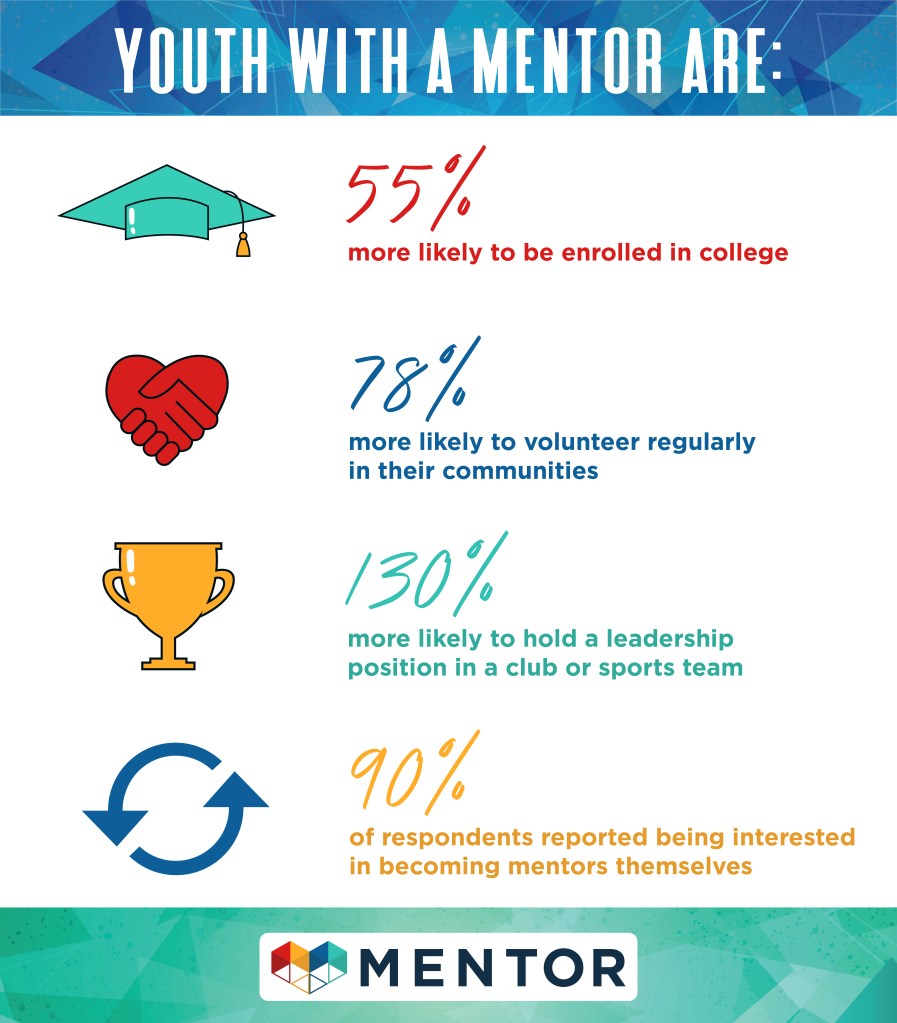
Research shows that mentors play a powerful role in providing young people with the tools to make responsible choices, attend and engage in school, and reduce or avoid risky behavior.
In turn, these young people are:
–55% more likely to be enrolled in college. –81% more likely to report participating regularly in sports or extracurricular activities.
–78% more likely to volunteer regularly in their communities.
–More than twice as likely to say they held a leadership position in a club or sports team.Yet, the same research shows that one in three young people in our country will grow up without a mentor.
National Mentoring Month is the time of year where engagement from community members interested in becoming a mentor is highest. To donate to the Harrisburg High School Class of 91 Alumni Scholarship Program visit: https://bit.ly/91Alumni
November is National Career Development Month. Career development is about setting career-related goals and acquiring the skills to achieve those goals.
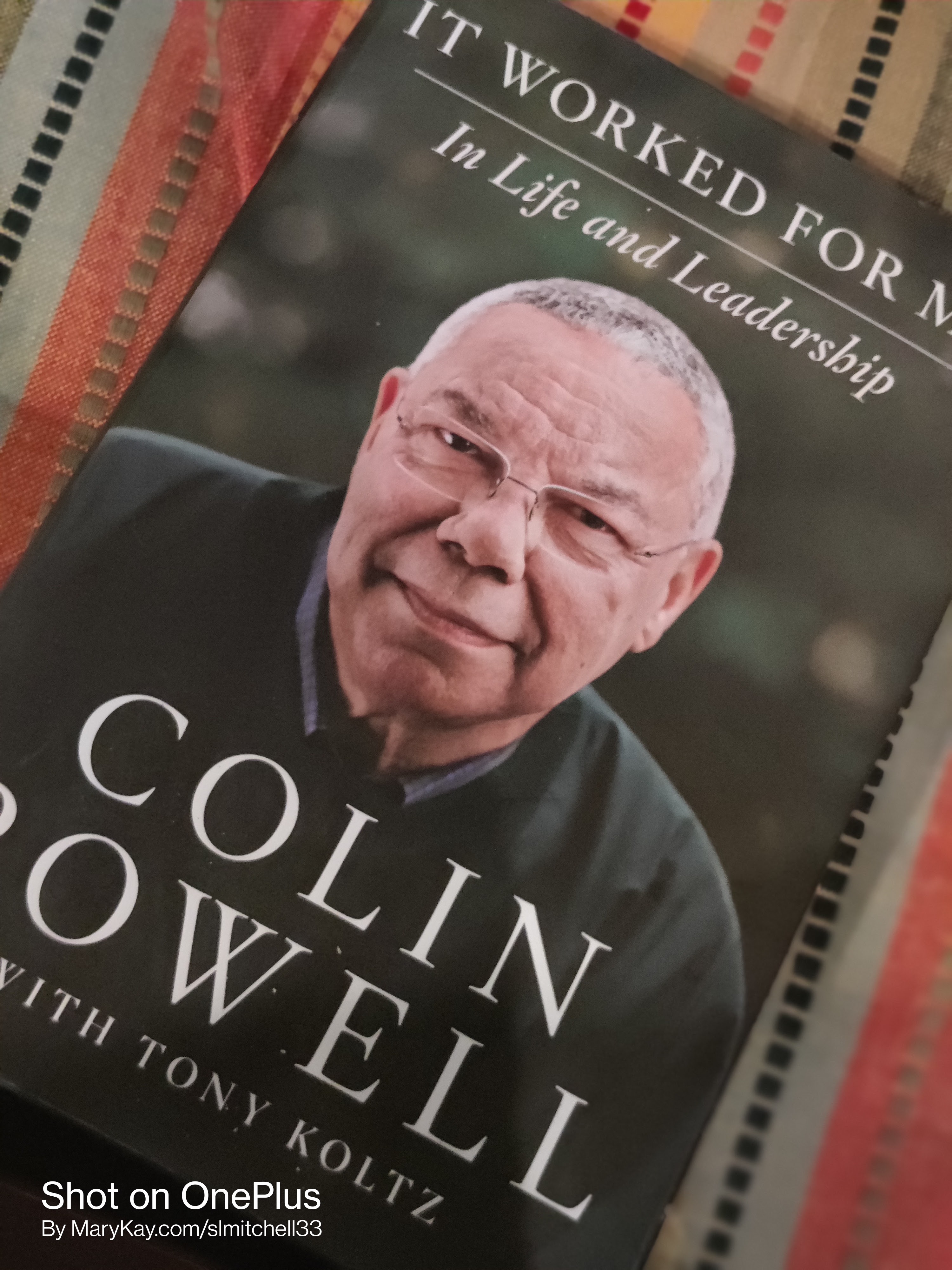
Photo of Colin Powell’s Book published in 2021 “It worked for me – In Life and Leadership”
Powell offered 13 rules for leadership in his 2012 memoir, It Worked for Me: In Life and Leadership.
It ain’t as bad as you think. It will look better in the morning. Leaving the office at night with a winning attitude affects more than you alone; it also conveys that attitude to your followers.
Get mad, then get over it. Everyone gets mad. It’s a natural and healthy emotion. My experience is that staying mad isn’t useful.
Avoid having your ego so close to your position that when your position falls, your ego goes with it. Accept that your position was faulty, not your ego.
It can be done. Have a positive and enthusiastic approach to every task. Don’t surround yourself with instant skeptics.
Be careful what you choose: You may get it. You will have to live with your choices. Some bad choices can be corrected. Some you’ll be stuck with.
Don’t let adverse facts stand in the way of a good decision. Superior leadership is often a matter of superb instinct. When faced with a tough decision, use the time available to gather information that will inform your instinct.
You can’t make someone else’s choices. You shouldn’t let someone else make yours. Make sure the choice is yours and you are not responding to the pressure and desire of others.
Check small things. Leaders have to have a feel for small things — a feel for what is going on in the depths of an organization where small things reside.
Share credit. People need recognition and a sense of worth as much as they need food and water.
Remain calm. Be kind. Few people make sound or sustainable decisions in an atmosphere of chaos.
Have a vision. Be demanding. Followers need to know where their leaders are taking them and for what purpose. Good leaders set vision, mission, and goals.
Don’t take counsel of your fears or naysayers. Those who do risk wasting their time and energy.
Perpetual optimism is a force multiplier. If you believe in the likelihood of success, your followers will too.
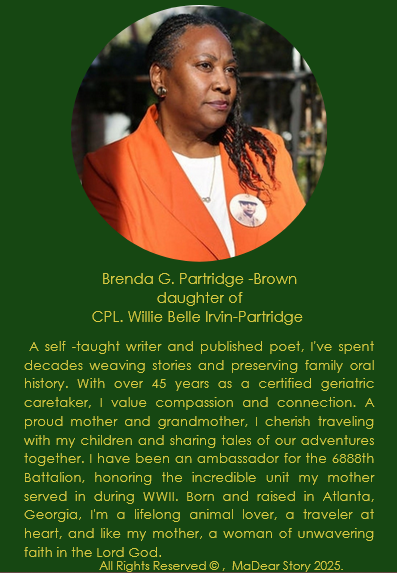
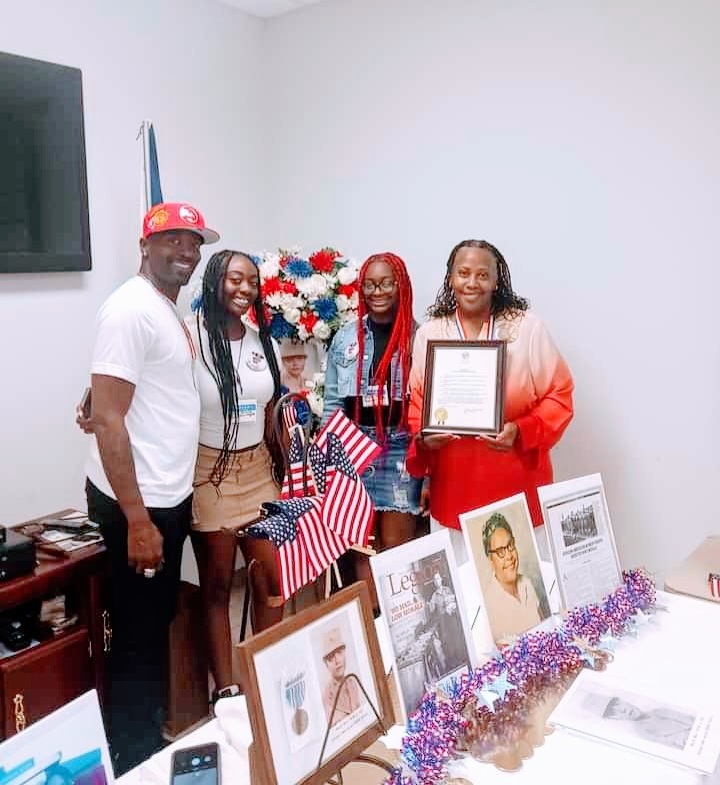
Current Role/Profession or Area of Expertise: Brenda Partridge – Brown is a proud daughter of the 6888th Central Postal Directory Battalion and enthusiastic community advocate.
Brief Background
Brenda G. Partridge-Brown is an author, self-taught writer, published poet, and enthusiastic community advocate whose life’s work centers on preserving history, honoring service, and uplifting untold stories. Born and raised in Atlanta, Georgia, Brenda has spent decades weaving narratives rooted in compassion, connection, and remembrance—both through her creative work and her career as a certified geriatric caretaker.
“It is very important that I continue to tell the story of my mother, and the stories of her 6888th Sisters In Arms to keep their legacy alive for future generations to come.”
A proud mother and grandmother, Brenda understands firsthand the importance of passing stories from one generation to the next. That understanding fuels her unwavering commitment to honoring the women of the 6888th Central Postal Directory Battalion, including her mother, whose World War II service inspired Brenda to become a devoted ambassador for this historic unit. As national awareness continues to grow—highlighted by major media recognition, including CNN’s coverage of the battalion’s extraordinary contributions—Brenda remains steadfast in ensuring their legacy is preserved with dignity and truth.
Connection to the 6888th
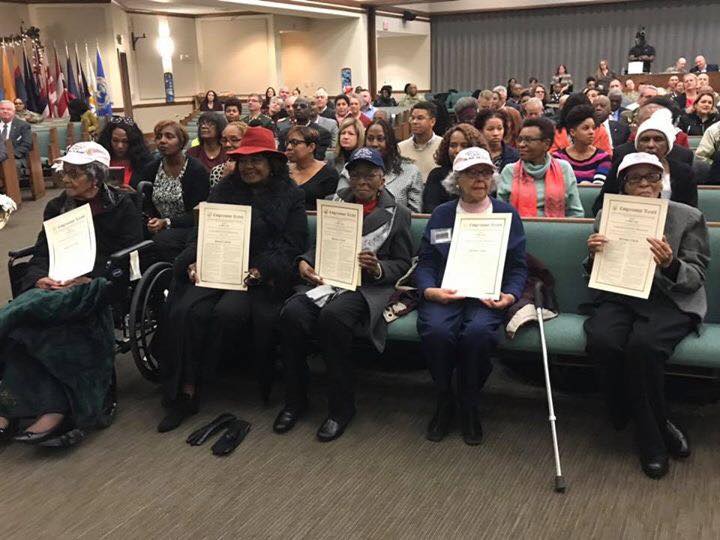
Photo Credit Brenda Partridge-Brown. Picture of 5 members of the battalion at the dedication of the 6888th CPDB, their primary monument is located at the Buffalo Soldier Military Park at Fort Leavenworth, Kansas, honoring the pioneering all-Black, all-female WWII postal battalion. This monument features a bronze bust of LTC Charity Adams (Earley) and granite panels listing the names of the 855 women who cleared massive mail backlogs in Europe, showcasing their incredible service and paving the way for future women in the military.
What inspired you to become involved in the 6888th Stamp Project?
My inspiration comes directly from my mother, who was a member of this amazing battalion. Knowing her story—and the sacrifices she and her Sisters In Arms made—compelled me to ensure their service is properly recognized and remembered.
“I was inspired to become involved with the 6888th Stamp Project because my mother was a member of this amazing battalion.”
What are you currently focused on as an ambassador for the 6888th?
I am currently focused on getting the word out about the future 6888th Forever Stamp. This stamp represents far more than postage—it is a lasting tribute to the resilience, excellence, and unity demonstrated by these women during World War II.
“I am focusing on getting the word out about the future 6888th Forever Stamp!”
Role and Contributions
Why is it important for you to continue telling the story of the 6888th?
These women served their country during a time when their contributions were often overlooked or erased from the historical narrative. Continuing to tell their stories ensures that their courage, commitment, and impact are never forgotten.
“Their legacy deserves to live on—not just in history books, but in the hearts of future generations.”
Can you share a milestone you are especially proud of?
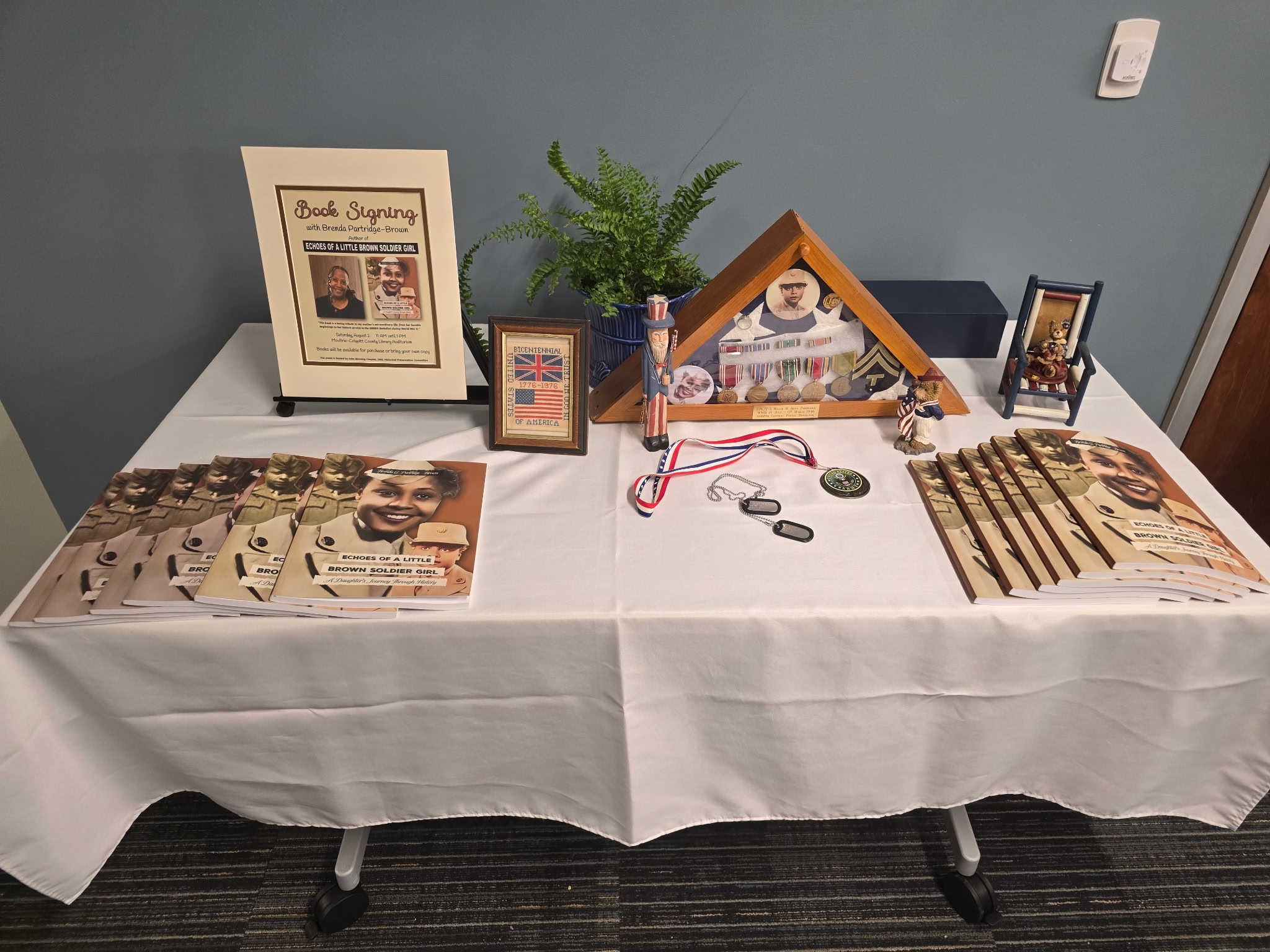
I am deeply proud to have completed my book, Echoes of A Little Brown Soldier Girl: A Daughter’s Journey Through History, which chronicles my mother’s remarkable journey alongside the collective history of her Sisters In Arms. The book is both a personal tribute and a powerful act of preservation.
“I am proud to have completed my book that tells my mother’s amazing journey along with her Sisters In Arms history.”
What do you hope the release of the 6888th Forever Stamp will achieve?
I hope that once the 6888th Forever Stamp is released, the history-making stories of these women will be told around the world—forever. Their service deserves global recognition, and this stamp ensures their place in history is permanent.
“Once the 6888th Forever Stamp is released, their history-making stories will be told around the world forever.”
What message would you like future generations to take away from the story of the 6888th?
The women of the 6888th proved what is possible when individuals unite around a shared purpose. Their story is a reminder that collective strength can overcome barriers and create lasting change.
“I want future generations to know how powerful they can be—how they can move mountains as a unit together while making even more Black history.”
Your Support Powers This Mission
Our work is not finished. Every new signature pushes us closer to a stamp that ensures the 6888th receives the national acknowledgment they earned through courage, excellence, and unwavering dedication.
Inspiring2BMore Announces the Expansion of the Navigating Changes Series with the Release of Emotional Discovery: Discovering You New Reflective Guide Supports Personal Growth, Emotional Awareness, and Life Transitions
January 2026 — Inspiring2BMore proudly announces the continued growth of the Navigating Changes Series with the release of Book Two, Emotional Discovery: Discovering You: A Journal for Personal Growth and Transformation. The book has been made available beginning January 25, 2026 on Amazon, Barnes & Noble, and https://books.by/inspired2bmore.
The Navigating Changes Series was created to support individuals navigating personal, professional, and emotional transitions with clarity, intention, and confidence. The series began with Book One, From Veteran to Visionary, which focuses on transforming lived experience into purpose, direction, and renewed vision. Together, the series provides practical guidance, reflection, and encouragement for those seeking meaningful change.
Emotional Discovery: Discovering You builds on this foundation by turning inward—helping readers develop self-awareness, explore identity and values, and strengthen emotional resilience. Through guided reflection, thoughtful prompts, and structured exercises, the book offers tools to process stress, address self-doubt and imposter syndrome, and cultivate habits that support long-term personal growth.
In addition to the book, a complementary Emotional Discovery journal is available to deepen the experience. The journal provides a safe and empowering space for readers to capture insights, reflect on prompts, and track their growth journey alongside the book.
“The Navigating Changes Series was created for anyone standing at a crossroads,” said Stephanie L. Mitchell, Founder of Inspiring2BMore. “Whether you are redefining who you are, stepping into a new chapter, or simply seeking clarity, these books are designed to meet you where you are and walk beside you forward.”
About Inspiring2BMore Inspiring2BMore is a personal growth and empowerment brand dedicated to helping individuals navigate change, discover purpose, and create meaningful lives through books, resources, and transformational content.
Media Contact: Inspiring2BMore Email: Inspiring2BMore@gmail.com
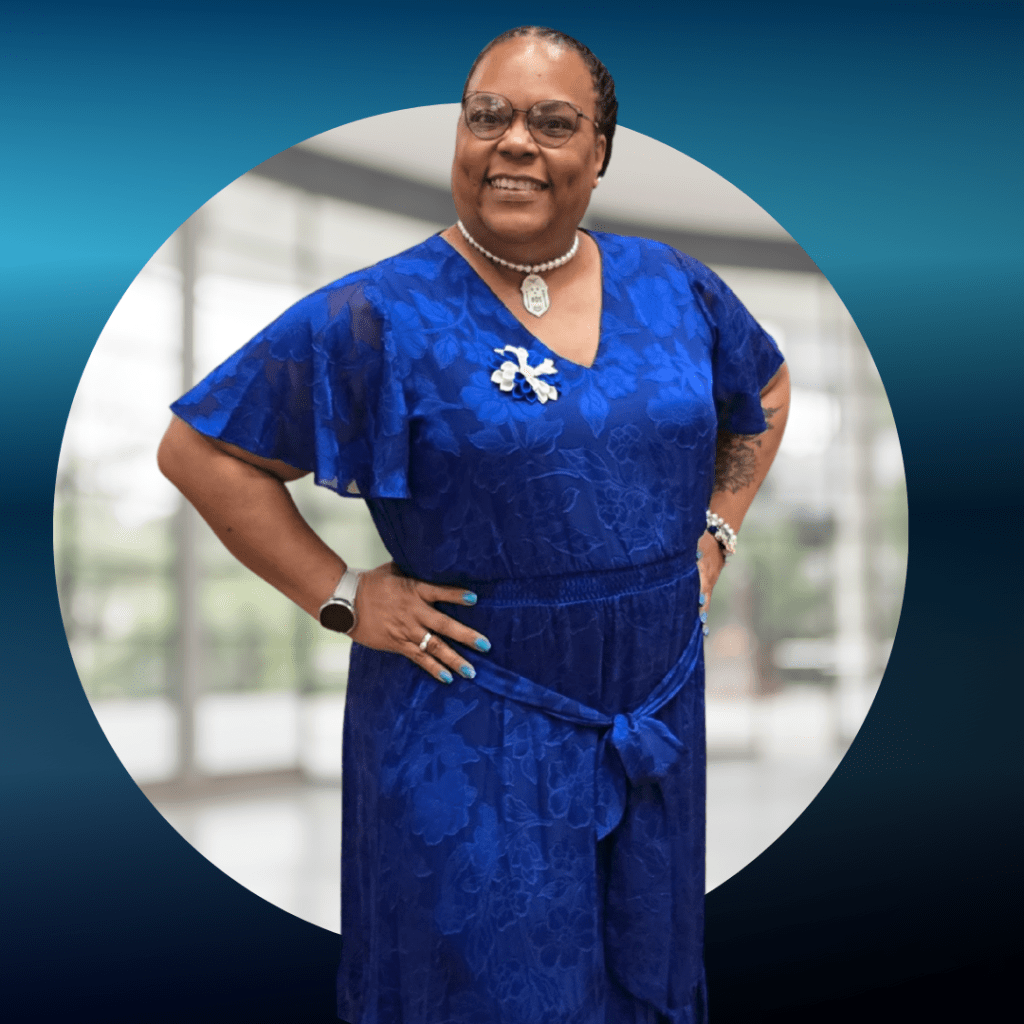
Current Role/Profession or Area of Expertise: Stephanie Mitchell is a dedicated community advocate and veteran, committed to honoring and uplifting the stories of women in service. She is the founder of Inspiring2BMore, LLC, a human resources professional, and holds leadership roles within nonprofit organizations that strengthen and support communities.
Brief Background
Stephanie Mitchell has dedicated her life to supporting veterans and preserving their legacies. She established the Mitchell Family Endowed Scholarship for Veteran Student Life at the University of Maryland to help veteran-connected students achieve their educational goals. In addition, she serves on the Army Women’s Foundation Scholarship Board, where she helps provide scholarships and recognition to Army women and their families, advancing opportunities for those who have served. Stephanie is also the author of From Veteran to Visionary: Navigating Career Changes with Confidence (https://www.amazon.com/dp/B0C5Y8QH6S), offering guidance and inspiration to veterans and others navigating life and career transitions. Through her work, she amplifies stories of service, resilience, and leadership, ensuring they continue to inspire communities and future generations.
Connection to the 6888th
How did you first learn about the 6888th Central Postal Directory Battalion?
I first learned about the 6888th after a mentor told me about an all-Black female Army battalion — a unit that looked like me. These women were trailblazers. As a veteran myself, I’ve always felt a responsibility to understand the shoulders I stand on. Once I discovered how these multi-ethnic women of color served with discipline, courage, and excellence despite discrimination and incredible pressure, I knew their story was one I needed to not only remember but uplift.
What inspired you to become involved in the 6888th Stamp Project?
What inspired me was simple: the Six Triple Eight deserved better. They deserved recognition, honor, and a place in our nation’s history books that matched the magnitude of their service. As someone committed to community, service, and legacy-building, joining this movement felt like a continuation of my purpose. I’ve spent years pushing people to step into their power — and this project is about giving these women their long-overdue flowers.
What does the legacy of the 6888th mean to you personally?
Their legacy reminds me of the strength, resilience, and brilliance that multi-ethnic women of color have always brought to the fight — even when the world refused to see it. Personally, it’s a standard of excellence. It pushes me to be intentional in how I show up, how I serve, and how I uplift others through Inspiring2BMore.org and my community work. The Six Triple Eight didn’t wait for permission to make history; they just did the work. That spirit drives me every day.
Is there a particular member or story that resonates deeply with you?
Lena Derricott King deeply resonates with me. She is a proud member of the 6888th Central Postal Directory Battalion, and her life represents service that did not end when the uniform came off. After the war, she continued her commitment to excellence through education, leadership, and advocacy—carrying forward the discipline, resilience, and purpose she developed during her military service.
What makes her story especially meaningful to me is both a personal and generational connection. Lena Derricott King was born on January 27, and I was born on January 31, 1973—we are 50 years and three days apart. That small gap feels symbolic, as if her path helped make space for mine, reminding me that legacy bridges generations in powerful ways.
To be able to know her personally makes this connection even deeper. Learning directly from her experiences, hearing her reflections, and witnessing her humility and strength firsthand has transformed her story from history into lived wisdom. It reinforces for me that service is not confined to a moment in time—it is a lifelong calling.
As someone who has served, led, and continues to pour into others, I see my own values reflected in hers: commitment, perseverance, and the belief that what we do today can inspire those who follow. Lena Derricott King’s life reminds me that legacy is built through consistency, purpose, and the courage to keep showing up—long after the spotlight fades.
Role and Contributions
What is your role or area of focus within the Stamp Team?
My primary role within the Stamp Team is community engagement, storytelling, and advocacy. I focus on ensuring that the history of the 6888th Central Postal Directory Battalion is not only shared, but felt—that people understand why this story matters and see themselves connected to it. Through my platform, Inspiring2BMore, and my broader work in leadership and community service, I help translate history into accessible, relatable conversations that inspire action.
I actively engage organizations, civic groups, veterans’ communities, and everyday individuals to build awareness and encourage participation in the Forever Stamp initiative. My goal is to bridge generations—connecting those who lived this history with those just discovering it—while creating space for reflection, learning, and collective pride. Advocacy, for me, is about education, connection, and empowering others to become part of the legacy.
What accomplishment on the project are you most proud of?
One of the moments I am most proud of is reaching people who had never heard of the 6888th and witnessing their genuine reaction—surprise, pride, and often disbelief that such an important story was missing from mainstream history. Watching faces light up as they learn about the Battalion, ask questions, and then want to know more is deeply meaningful to me.
Knowing that our work is shifting awareness and bringing these women’s stories into everyday conversations—across generations, communities, and backgrounds—reminds me why this work matters. Each new person who learns about the 6888th becomes a carrier of their legacy, and being part of that ripple effect is something I hold close and consider a true accomplishment.
How is this project helping preserve African American women’s military history?
This project is preserving and elevating history in real time. For far too long, the service and sacrifices of multi-ethnic women of color in the military were overlooked, minimized, or omitted altogether. The 6888th Stamp Project directly challenges that silence by placing their story where it belongs—front and center, visible, and lasting.
A Forever Stamp is more than symbolic; it is permanent recognition. It ensures that future generations will encounter this history not only in books or museums, but in everyday life. This initiative educates, sparks curiosity, and honors women who served with excellence long before their contributions were widely acknowledged. By elevating their story now, we affirm their place in history and reinforce that service, leadership, and resilience come in many forms—and deserve to be remembered.
Vision and Reflection
What impact do you hope the 6888th Forever Stamp will have once released?
I hope the 6888th Forever Stamp becomes a meaningful reminder that people from many backgrounds—especially women—have always played an important role in keeping the country connected. Sometimes the most important work happens quietly, and things we may not always notice, like mail and communication, are what hold families, communities, and the nation together.
In 1945, the women of the 6888th Central Postal Directory Battalion made a powerful difference by restoring communication between soldiers and their loved ones during World War II. Their dedication helped boost morale and brought comfort during a difficult time, showing how teamwork, perseverance, and responsibility can have a lasting impact.
Today, the stamp honors their service in a simple but meaningful way. It reaches people of all ages and backgrounds and encourages learning, appreciation, and respect for contributions that were overlooked in the past. By appearing on everyday mail, it keeps their story present in daily life.
Looking toward the future, I hope the stamp inspires people—especially young women—to recognize that even small actions matter. It shows that behind every connection is effort, care, and commitment, and that recognizing these contributions helps keep us united as a nation.
How has being part of this movement influenced you personally or professionally?
Being part of this movement has influenced me both personally and professionally by grounding me more deeply in purpose. Learning about the 6888th Central Postal Directory Battalion—and seeing their service honored through the Forever Stamp—has reinforced the idea that meaningful impact often comes from steady, committed work that may not always be visible. That lesson closely reflects how I approach my life and work.
Personally, it has strengthened my passion for empowering others through Inspiring2BMore.org and through my book series, Navigating Changes. The women of the 6888th demonstrated resilience, leadership, and adaptability during uncertain times—qualities that align with the messages I aim to share about growth, confidence, and navigating life’s changes with purpose.
Professionally, this movement connects directly to my scholarship work with the Army Women’s Foundation, where supporting education and opportunity helps honor the service and legacy of women who have contributed to our nation. In addition, my work with IamLightLegacy.com, a human trafficking awareness nonprofit, is inspired by the same commitment to service, dignity, and protection of others that the 6888th embodied through their dedication and teamwork.
Overall, the influence of the 6888th CPDB and the Forever Stamp has helped shape who I am by reminding me that honoring history, uplifting others, and creating pathways for opportunity are all connected. Their legacy continues to guide my personal mission and professional work, encouraging me to lead with purpose, compassion, and a commitment to making a lasting difference.
What message would you like to share with supporters or future generations about this project?
Your voice matters. Your efforts matter. And your willingness to honor those who came before you keeps our history alive. Don’t let stories like the 6888th fade — amplify them, teach them, and let them shape how you lead and serve.
In one word or short phrase, how would you describe the spirit of the Stamp Team?
Unstoppable legacy-builders.
Your Support Powers This Mission
Our work is not finished. Every new signature pushes us closer to a stamp that ensures the 6888th receives the national acknowledgment they earned through courage, excellence, and unwavering dedication.
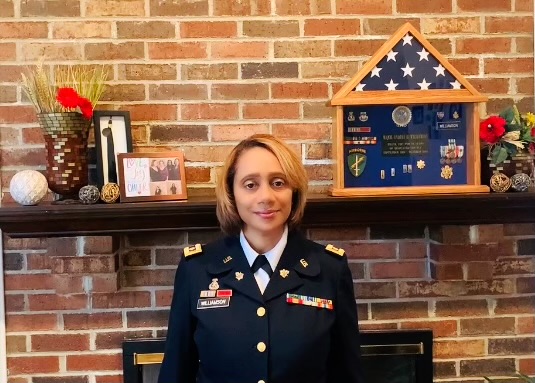
Current Role/Profession or Area of Expertise: African American Federal Executive Association (AAFEA) Board Member and Maryland Ambassador, Military Women’s Memorial
Brief Background
Andrea Darline Catlin Williamson is a retired United States Army Reserve Major who proudly served in two branches: the Adjutant General Corps and Civil Affairs. She brings the same dedication, discipline, and leadership she exemplified throughout her military career to every facet of her community service.
Andrea holds a B.S. in Communications/Public Relations from Shippensburg University and an M.A. in Organizational Leadership from American Military University. She currently serves on the Board of the African American Federal Executive Association (AAFEA) and as a Maryland Ambassador for the Military Women’s Memorial. She is also an engaged and active member of Alpha Kappa Alpha Sorority, Inc., Iota Gamma Omega Chapter in Prince George’s County, MD.
During her 34-year federal service career, Andrea spent more than 25 years as a Federal Acquisition Contract Program and Project Manager, overseeing contracts exceeding $25 million. Her work reflects a legacy of strong leadership, strategic execution, and a commitment to excellence.
Connection to the 6888th
How did you first learn about the 6888th Central Postal Directory Battalion?
I first learned about the 6888th in 2021 while watching a Veterans Day news segment that featured the last living members of this historic battalion.
What inspired you to become involved in the 6888th Stamp Project?
As I watched that segment, I felt compelled to learn more about the eight living legends who were featured. These women cleared paths many of us would later walk through. I wanted to honor them in a meaningful way.
I reached out to Commander Clarence Philpot, a retired Navy historian, who connected me with Sergeant Major (Ret.) Elizabeth Helm Frazier. With Elizabeth’s guidance—and in my role as former Co-Chair of the Veterans Affinity Group—we recognized the legacy of the 6888th during HUD’s 2022 Memorial Day Program by presenting Certificates of Remembrance to Janice Martin, daughter of PFC India Hunt Martin, and Patricia Heldoorn, daughter of PFC Deloris L. Rudock Ruddock.
Presenting these certificates during the 80th Anniversary of the Women’s Army Corps was an honor I will never forget.
What does the legacy of the 6888th mean to you personally?
The 6888th served during a time when African-American women were not expected to lead, excel, or even serve.
When I reflect on their legacy, I think of the women who stood in uniform long before I ever wore my first pair of boots. As an African-American female officer who proudly served 20 years, I know my journey is connected to theirs. The women of the 6888 faced racism, sexism, doubt, and isolation—challenges that echo across generations. Yet they showed up with discipline, skill, and pride, performing their mission so well that the world had no choice but to acknowledge them.
Their legacy reminds me that I belong in the uniform, that my leadership matters, and that my service contributes to something greater than myself. The 6888th proves that Black women’s excellence is not new—it is historic. I carry their legacy with me, and my responsibility is to keep doors open for the women who will come after me.
Is there a particular member or story that resonates deeply with you?
Yes. The moment when a General threatened to replace Major Charity Adams with a male officer resonated with me personally because I experienced something similar.
A General of the 352nd Civil Affairs Battalion once told me he planned to relieve me of my commission. I immediately contacted my two platoon leaders and said, “We’re going to see the General.” We walked into his office without an appointment, and I told him directly that if he relieved me of my commission, I would take my two Lieutenants with me. We walked out unified.
The next time we saw him, his demeanor had changed. Respect followed—and we continued our mission.
Role and Contributions
What is your role or area of focus within the Stamp Team?
My focus is gathering signatures across the North Atlantic Region of Alpha Kappa Alpha Sorority, Inc., as well as from mayors across the United States, in addition to engaging my family, friends, and professional network.
What accomplishment on the project are you most proud of?
I am especially proud that the North Atlantic Regional Director of Alpha Kappa Alpha Sorority, Inc., promoted the petition across all five regional clusters—from Delaware to Vermont. This effort educated members and sparked excitement about supporting the 6888th Forever Stamp.
How is this project helping preserve African American women’s military history?
Every stamp tells a story. A U.S. Forever Stamp featuring the 6888th places their history into the daily lives of millions. Each time someone uses or sees the stamp, it sparks curiosity: Who were these women? What did they accomplish?
The stamp serves as a national acknowledgment of strength, courage, and excellence. It elevates African American women’s military history by giving long-overdue visibility to a battalion whose service changed the course of military logistics and representation. It corrects historical omissions and reinforces the significant place these women hold in America’s story.
Vision and Reflection
What impact do you hope the 6888th Forever Stamp will have once released?
I hope it encourages people to explore the hidden history of the Six Triple Eight and highlights a military operation that has often been overlooked. My hope is that the stamp brings long-awaited recognition to these trailblazing women and inspires schools, communities, and future generations to learn their story. Most of all, I hope it ensures that their legacy of courage, service, and excellence continues to shape how we honor African American women in uniform.
Your Support Powers This Mission
Our work is not finished. Every new signature pushes us closer to a stamp that ensures the 6888th receives the national acknowledgment they earned through courage, excellence, and unwavering dedication.
Amplifying the 6888th: Stories, Strength, and Service from the Men and Women Behind the Mission
The 6888th Central Postal Directory Battalion — the only predominantly Black, multi-ethnic, all-female U.S. battalion deployed overseas during World War II — changed history through their service, discipline, and determination. Today, a dedicated national team of veterans, descendants, advocates, and community leaders continues the mission to secure a U.S. Forever Stamp honoring these trailblazing women.
To highlight the advocates powering this effort, we are proud to launch our new Stamped Into History Spotlight Series, beginning with one of our passionate team members:
Decatur, Georgia Author, Published Poet, 6888th Ambassador, Enthusiastic Community Advocate
Brenda G. Partridge-Brown brings heart, authenticity, and generational purpose to the 6888th Stamp Project. An author, self-taught writer, published poet, and enthusiastic community advocate, Brenda is deeply committed to preserving family history and ensuring the extraordinary legacy of the 6888th Central Postal Directory Battalion is remembered, honored, and carried forward. As a proud mother and grandmother, her work is rooted in storytelling, service, and intergenerational connection.
Through her writing, advocacy, and community outreach, Brenda amplifies the voices of the women who served during World War II—especially her mother, whose service in the 6888th continues to inspire Brenda’s mission.
Her Connection to the 6888th
Brenda’s connection to the 6888th Central Postal Directory Battalion is deeply personal. Her mother was a proud member of this historic unit, and growing up hearing her stories shaped Brenda’s understanding of courage, sacrifice, and service.
What began as family oral history has become a lifelong commitment to preservation. Brenda honors not only her mother’s journey, but the collective stories of the women who served beside her—women who worked tirelessly under extreme conditions to ensure millions of pieces of mail reached U.S. troops overseas.
“It is very important that I continue to tell the story of my mother, and the stories of her 6888th Sisters In Arms to keep their legacy alive for future generations to come.”
Why the 6888th Legacy Matters to Her
For Brenda, the legacy of the 6888th represents strength, unity, and excellence in the face of discrimination and limited recognition. These women proved that dedication and teamwork could overcome barriers and change history.
As awareness of the 6888th continues to grow nationally, Brenda remains focused on ensuring their stories are shared with accuracy, respect, and heart. She believes honoring their legacy also honors the countless women whose contributions have too often gone unseen.
A Story That Resonates
The story that resonates most deeply with Brenda is her mother’s journey—her courage, perseverance, and quiet determination. Through years of reflection and research, Brenda has transformed her mother’s experiences into a powerful written legacy.
Brenda is the author of Echoes of A Little Brown Soldier Girl: A Daughter’s Journey Through History, which chronicles her mother’s life and service alongside the collective history of her Sisters In Arms. The book stands as both a personal tribute and a historical preservation.
“I am proud to have completed my book that tells my mother’s amazing journey along with her Sisters In Arms history.”
Her Role on the Stamp Team
Brenda’s role within the Stamp Project centers on advocacy and awareness. She works to spread the word about the future 6888th Forever Stamp, helping others understand why this recognition matters and how they can support the mission.
Through conversations, community engagement, and storytelling, Brenda helps transform history into something personal—inviting people to connect emotionally with the women of the 6888th and their extraordinary service.
“I am focusing on getting the word out about the future 6888th Forever Stamp!”
Her Hope for the Stamp’s Impact
Brenda believes the Forever Stamp will ensure that the women of the 6888th are recognized on a permanent, national level. She hopes the stamp will spark curiosity, conversation, and education for generations to come.
Once released, she envisions their stories being shared across classrooms, homes, and communities around the world—forever honoring their contribution to history.
“I hope that once the 6888th Forever Stamp is released, their history making stories will be told around the world forever!”
Stay Tuned for More Profiles
This is only the beginning. Our Stamped Into History Series will continue to highlight the powerful voices behind the movement — advocates, volunteers, descendants, historians, and community champions who are working tirelessly to ensure the Six Triple Eight receives the honor they deserve.
Celebrating the Work of the 6888th Forever Stamp Petition Team
Since launching the petition to honor the 6888th Central Postal Directory Battalion with a U.S. Forever Stamp, our team has worked tirelessly to elevate national recognition for this extraordinary World War II unit. What began as a grassroots effort has now grown into a nationwide movement supported by veterans, daughters and descendants, military children, historians, educators, community leaders, and everyday Americans determined to ensure the legacy of the Six Triple Eight lives on.
Why a Forever Stamp Matters
A commemorative U.S. Forever Stamp is more than a piece of postage — it is an enduring symbol of honor, remembrance, and national gratitude.
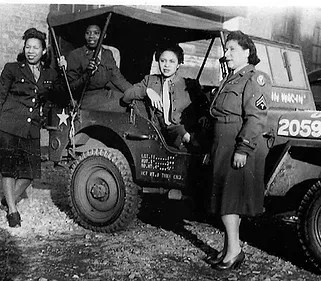
The 6888th was the only predominantly Black, multi-ethnic, all-female battalion deployed overseas during WWII. Under harsh, exhausting, and often dangerous conditions, they processed over 17 million pieces of backlogged mail, restoring morale across the European theater. Their motto — “No Mail, Low Morale” — became their mission.
A stamp ensures their story is not just remembered today but preserved for generations.
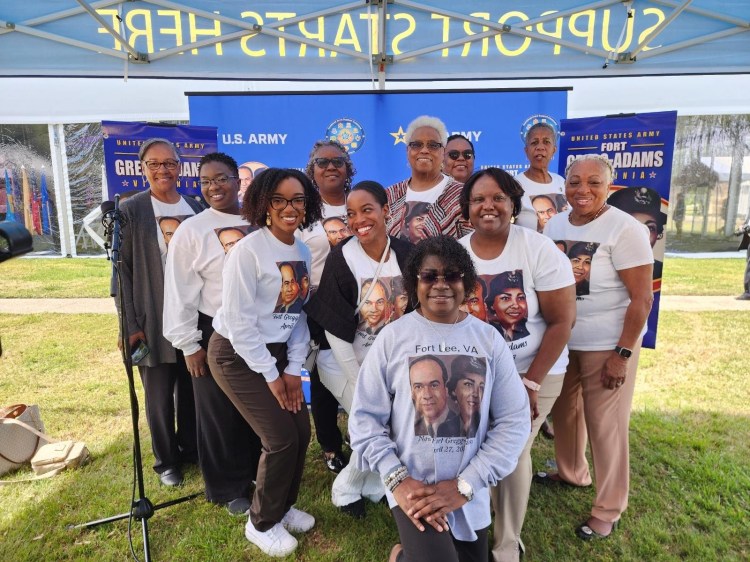
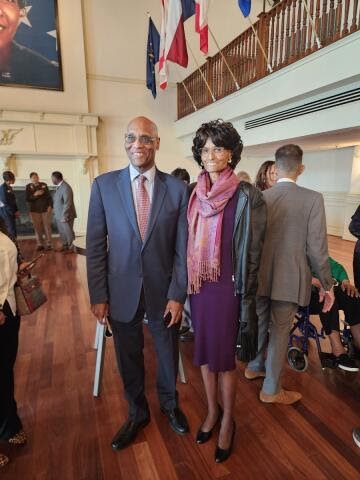
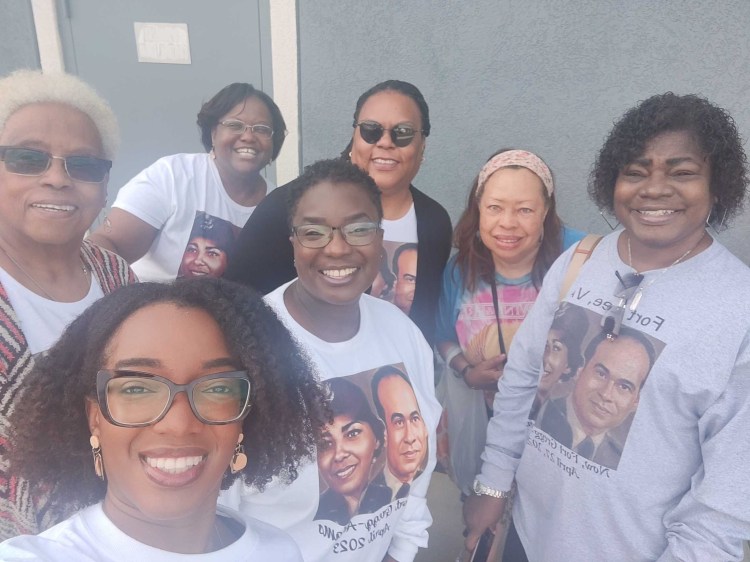
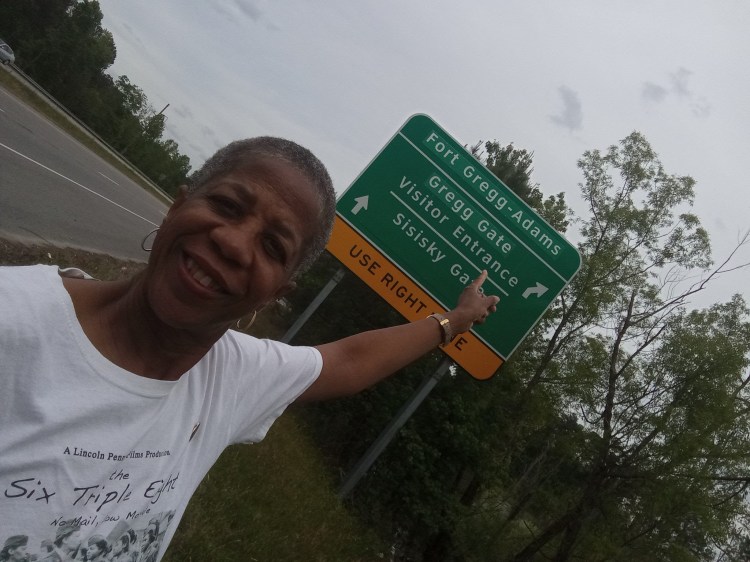
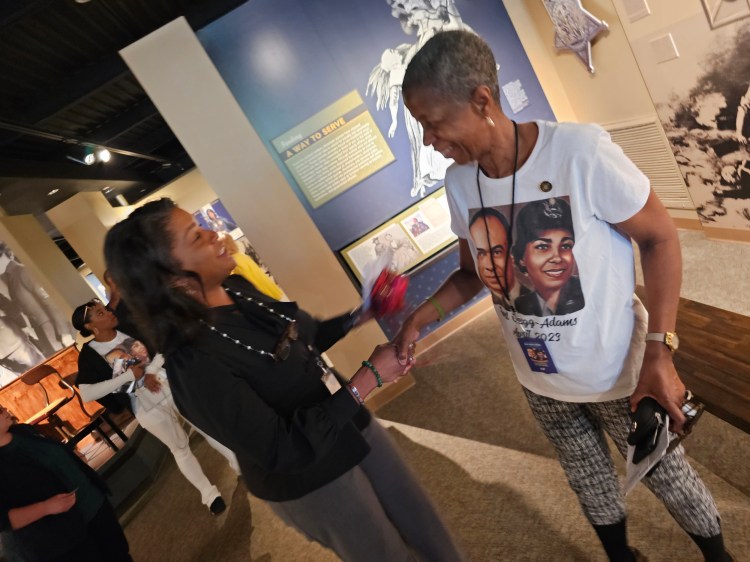
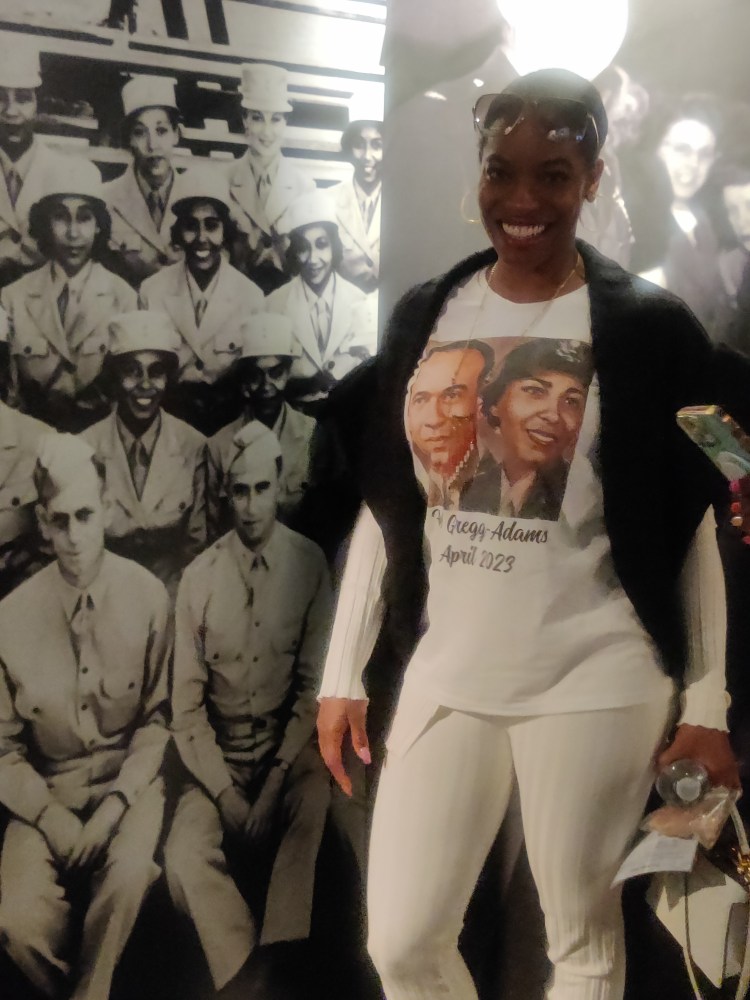
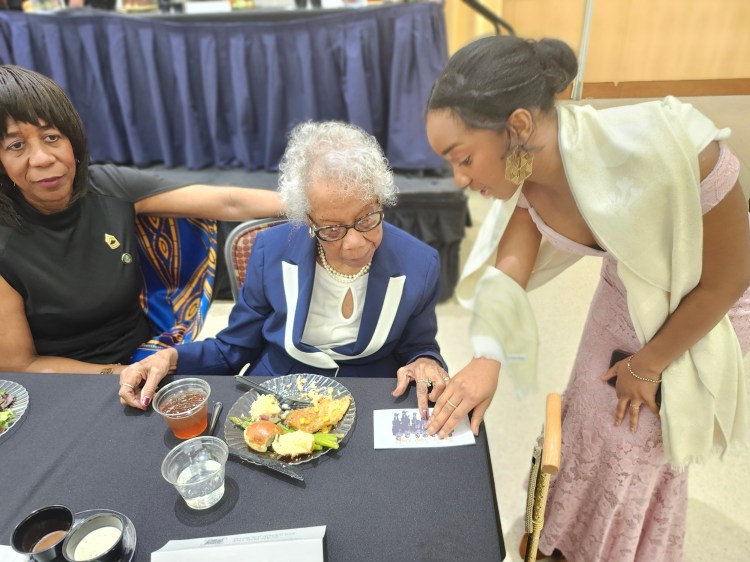
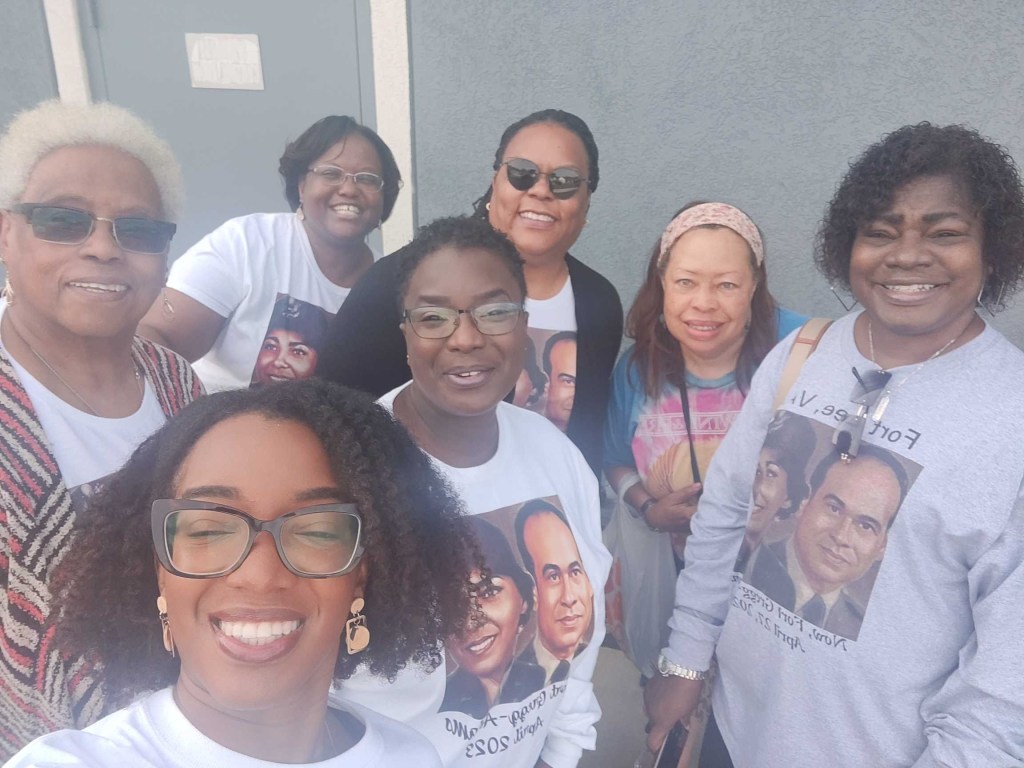
6888th CPDB family members and advocates at the Redesignation of Fort Lee to Fort Gregg-Adams
Fort Gregg-Adams Club: The children of Charity Adams
Family Members and Advocates
MSG (Ret) Elizabeth Helm-Frazier
MSG (Ret) Elizabeth Helm-Frazier speaking with a supporter at the Army WOmen Museum
Actress Milauna Jackson at the Army Women Museum. She played CPT Abbie Noel Campbell in the Tyler Perry Film SixTripleEight
MaLaysia Mitchell and Rosie the Riviter looking at an 6888th CPDB Cachet Envelop
Elizabeth Helm-Frazier being recognized at the 26th Annual NABVETs Event
Where We Stand Today
Thanks to passionate advocates and community support, the petition has already surpassed 10,000 signatures — bringing us closer to our next strategic target of 17,000, symbolically honoring the 17 million pieces of mail the battalion processed.
But our work continues. We remain focused on education, outreach, and mobilizing national support to ensure this long-overdue recognition becomes a reality.
Media Mentions & National Attention
The movement continues to gain momentum across multiple platforms:
📰 AFRO News highlighted the team’s response after the USPS initially declined to recommend the stamp, emphasizing that the proposal remains eligible for reconsideration and underscoring increasing public support.
📻 Additional NextUs818 episodes have continued to spotlight the 6888th, amplifying their story and the importance of this advocacy effort.
📺 Local news coverage, including features on Fox 2 News, has expanded visibility and inspired more Americans to take action.
Each mention helps broaden awareness and strengthen the national call to honor the Six Triple Eight.
On the Ground: Hard-Copy Signatures & Community Outreach
Beyond digital engagement, our team has been active in communities across the country — gathering nearly 400 hard-copy signatures at local events, ceremonies, and historical commemorations.
These in-person conversations not only boost our numbers but also connect people emotionally to the story of the 6888th. Many sign because they have never heard of the battalion until meeting our volunteers — a reminder of why this work is so critical.
Meet the Leaders Behind the Mission
At the forefront of this initiative is MSG (Ret) Elizabeth Helm-Frazier, Stamp Team Project Lead and nationally recognized 6888th CPDB advocate. A decorated Army veteran with more than 25 years of service, Elizabeth has devoted her post-military career to preserving the legacy of the Six Triple Eight.
Her achievements include:
Co-leading fundraising for the 6888th Monument at Fort Leavenworth
Serving as a producer for the documentary No Mail, Low Morale
Championing national recognition efforts, including the push for the Congressional Gold Medal
Our team spans the nation and includes dedicated advocates from diverse backgrounds — veterans, descendants, military children, historians, and civic leaders united for one cause.
Team Members include:
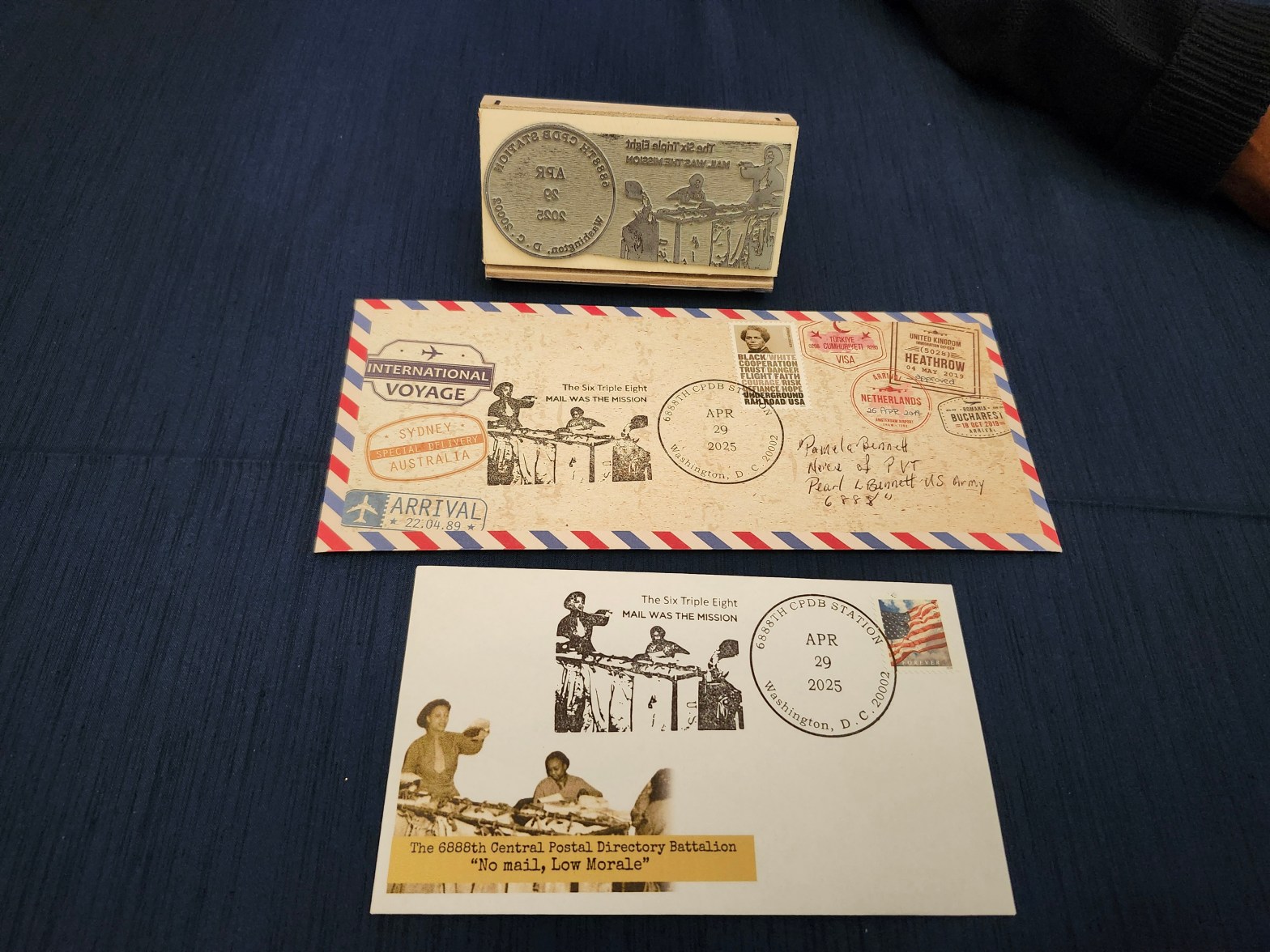
MaLaysia A. Mitchell — “Army Kid,” designer of the 6888th postal postmark released on April 29, 2025, in honor of the awarding of the Congressional Gold Medal
Derrick Johnson — dedicated advocate and volunteer
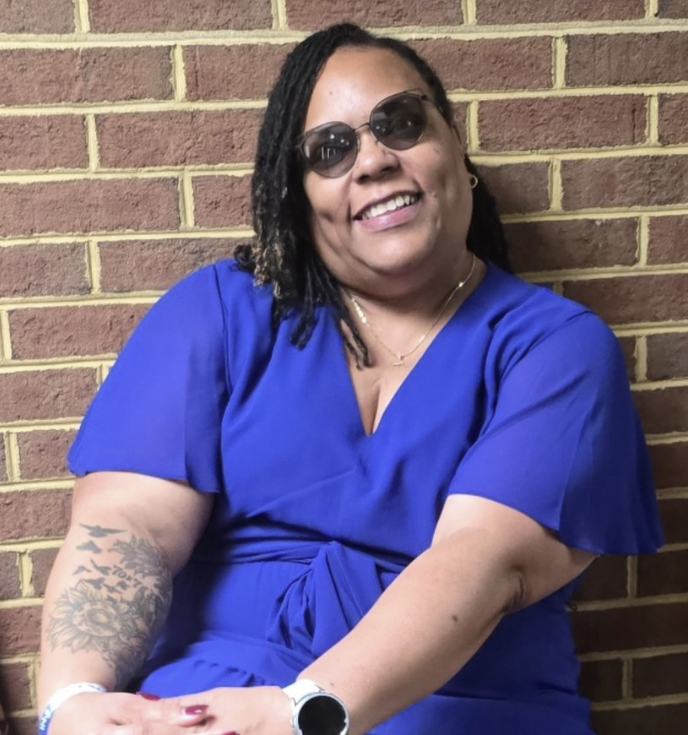
Andrea Williamson— dedicated advocate and volunteer
June Davis — dedicated advocate and outreach coordinator
Floyd Blackmon III — dedicated advocate and volunteer
Stamp Professor Félix Luis Pérez Folch Jr. — providing historical and philatelic expertise Learn more about the Stamp Professor visit: https://www.iboricua.com/
In future posts, we will share more detailed biographies, personal reflections, and behind-the-scenes stories from our team members and their advocacy journey.
Your Support Powers This Mission
Our work is not finished. Every new signature pushes us closer to a stamp that ensures the 6888th receives the national acknowledgment they earned through courage, excellence, and unwavering dedication.
We invite you to:
✔️ Sign the petition ✔️ Share it widely ✔️ Print signature sheets for local events ✔️ Talk about the 6888th — keep their story alive
Illuminating Purpose: The Inspiring Journey of Samine Parris-Stowes
“Every act of service, no matter how small, is a light against injustice.” — Samine Parris-Stowes
In a world where leadership and compassion rarely intersect, Samine Parris-Stowes stands as proof that they not only can — but must. A decorated U.S. Army veteran, dedicated public servant, and the visionary Founder and CEO of I Am Light Legacy, Inc., Samine’s life is a testament to resilience, service, and faith-driven purpose.
From Soldier to Servant Leader
“Service isn’t just what you do in uniform — it’s how you live after you take it off.” — from Haqq Dawah Media Interview
Samine’s distinguished career spans more than 25 years in the U.S. Army, where she retired honorably as a Sergeant First Class (SFC) in 2014.
For the first 12 years of her military service, she worked as a combat medic, providing critical care and compassion under pressure. She later transitioned to serve as a Career Counselor, where she spent more than 13 years mentoring soldiers and helping them shape purposeful futures.
After retiring, Samine continued to serve through the U.S. Social Security Administration as a Social Insurance Specialist and Claims Representative, continuing her lifelong mission to uplift, guide, and advocate for those in need.
“Whether it’s a soldier on the battlefield or a parent at the Social Security office, people just want to be seen and supported.” — Samine Parris-Stowes
A Legacy of Light Begins
“Being a legacy of light means showing up — in your family, your community, and your faith.” — Samine Parris-Stowes
In July 2025, Samine took her passion for advocacy and service to a new level by founding I Am Light Legacy, Inc. — a nonprofit dedicated to education, awareness, and empowerment. The organization’s core mission is to prevent human trafficking, support survivors, and educate communities through outreach, advocacy, and restoration.
The name “I Am Light Legacy” was born from Samine’s belief that every person carries light within them — a power meant to heal, to guide, and to serve others. Through the organization, she has created a platform that invites people to stand together against injustice and to live their light with purpose.
“You don’t wait for permission to shine your light — you shine where it’s needed most.” — Haqq Dawah Media Interview
Advocacy in Action: Zeta Phi Beta Sorority, Incorporated
As a proud and active member of Zeta Phi Beta Sorority, Incorporated, Samine has long exemplified the organization’s founding principles of scholarship, service, sisterhood, and finer womanhood. She currently serves as the Commonwealth of Virginia Zeta Male Network (ZMN) State Coordinator, a role that fosters collaboration between Zeta members and men in their communities to strengthen family, mentorship, and civic engagement.
In January 2024, Samine represented Zeta Phi Beta Sorority, Inc. at a Congressional Briefing in Washington, D.C. on human trafficking awareness — a defining moment that showcased her dedication to advocacy on both national and community levels.
“Brotherhood and sisterhood are not just titles — they are action words. They’re how we build stronger communities.” — Samine Parris-Stowes
A Voice for Change
In her heartfelt appearance on the Haqq Dawah Media podcast — “One Ummah News Hour Special: I Am Light Legacy” — Samine spoke powerfully about her faith, her experiences, and her vision for change.
“Awareness isn’t enough. We need to activate — to protect our families, to educate our youth, to move from conversation to collaboration.” — Samine Parris-Stowes
Her message was both practical and deeply spiritual: the work of ending injustice and uplifting humanity starts with each of us taking responsibility for the light we carry.
“The legacy of light begins when you decide that silence is no longer an option.” — Samine Parris-Stowes
Be Part of the Legacy
If Samine’s story inspires you, consider joining her mission. Your donation helps I Am Light Legacy, Inc. provide resources, education, and advocacy to prevent human trafficking and support survivors on their journey to restoration.
Every contribution fuels awareness programs, survivor outreach, and educational workshops designed to bring safety, healing, and empowerment to communities in need.
“We can’t do it alone — but together, we can outshine the darkness.” — Samine Parris-Stowes
Connect & Follow the Light
To join the movement and follow Samine’s journey, connect with I Am Light Legacy, Inc. across platforms:
“Light is not a metaphor — it’s a mission.” — Samine Parris-Stowes
Through every act of service — from the frontlines of the military to the heart of community advocacy — Samine Parris-Stowes reminds us that real leadership begins with love and ends with legacy.
Her story is a beacon to all who seek to make a difference: Be the light. Build the legacy. Leave the world better than you found it.
MSG (Ret.) Elizabeth Ann Helm-Frazier is a shining example of how a mentor becomes a multiplier. She helped me find my footing and encouraged me to stand tall in spaces where I once felt unseen. Her legacy lives on in every soldier I’ve mentored, every career I’ve helped shape, and every young woman of color who dares to raise her hand and say, “I belong here.”
To Elizabeth and mentors like her: thank you for seeing us before we fully saw ourselves. Thank you for pouring into us. Your legacy is living, breathing, and multiplying in ways you may never fully realize.
Because of you, we don’t just serve—we lead, we inspire, and we become the mentors we once needed.
Pictured: DAR President Pamela Rouse Wright’s, MSG (Ret) Helm-Frazier and guest at the DARS National Defense Night on 29 June 2025 (https://www.dar.org/)
And with deepest admiration, congratulations on your well-deserved recognition during the 134th Continental Congress of the National Society Daughters of the American Revolution, held on June 29, 2025. Your receipt of the prestigious Medal of Honor is a powerful affirmation of the impact you’ve made—not just in uniform, but in life. Your service, sacrifice, and spirit have left an indelible mark on history, and we are all better for it.
Thank you for continuing to lead by example. You are the legacy we aspire to build upon.
🎖️ Military Career & Advocacy
Extensive military service: She enlisted in 1981, ultimately retiring in 2006 as a Master Sergeant after over 25 years in key personnel roles—specializing in career counseling (MOS 75‑Echo & 79‑Sierra). During her service she was named TRADOC Career Counselor of the Year and San Antonio’s Mentor of the Year (1).
Championing career development: After retiring, she continued mentoring warriors—especially women—and became a powerful advocate for African‑American Army history and veteran recognition (4).
📨 Guardian of the 6888th’s Legacy
MSG (Ret) Elizabeth Helm‑Frazier is renowned for her tireless work to preserve and elevate the story of the Six Triple Eight, the only predominantly Black, multi ethnic, all‑female WAC unit deployed overseas in WWII:
Fundraising for their monument: She co-led efforts to erect the 6888th monument at Fort Leavenworth, unveiled in November 2018, ensuring their service is physically honored on historical grounds (1).
Documentary production: Served as a producer on The Six Triple Eight: No Mail, Low Morale (aka No Mail, Low Morale), spotlighting the battalion’s mission to clear a massive backlog of GI mail and lift morale during the war (1).
Driving legislative recognition: Played a major role in securing a Congressional Gold Medal for the 6888th in 2021 and establishing National 6888th Battalion Day at the National Archives (September 16) (1).
Public speaking & education: Delivered keynotes—including at Wayland Baptist University in 2020—recounting the battalion’s 1945 mission in England, highlighting its critical impact on morale by sorting 18 million letters and packages (3).
🏆 Army Women’s Foundation Hall of Fame, Class of 2020
In March 2020, she was inducted alongside other distinguished service members. Her honors included recognition for her leadership, recruitment achievements, and advocacy. She was particularly noted for her work in preserving the legacy of the 6888th (2).
🌍 The 6888th: A Unit Worth Remembering
Who they were: A predominantly Black, multi‑ethnic WAC unit of 855 women. They were led by Major Charity Adams. This unit was tasked with clearing a two‑year mail backlog in the UK and France in 1945 (5).
Their impact: They operated nights and weekends at an astonishing pace. They processed up to 65,000 pieces per shift. This transformed morale, hence the motto “No mail, low morale”. They completed their mission ahead of schedule (5).
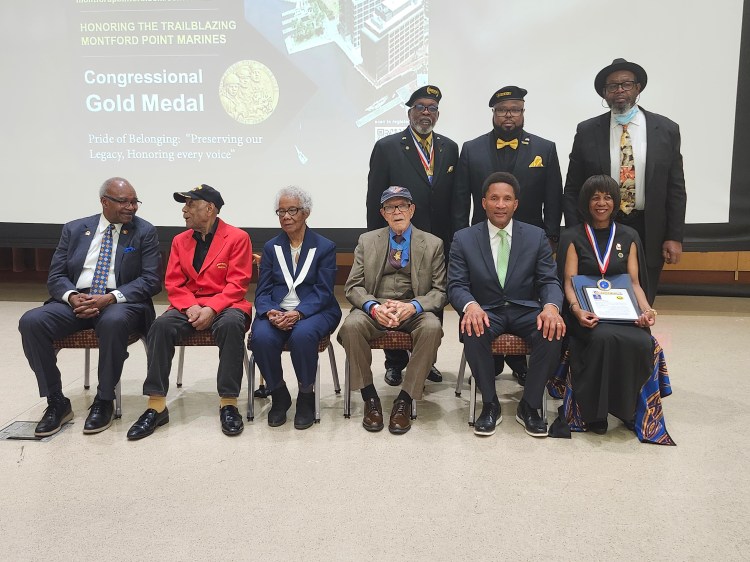
Their legacy today: Their service was recognized with a Meritorious Unit Commendation and a Congressional Gold Medal. They have monuments and documentaries dedicated to them. A stage musical, feature film, and ongoing commemorative efforts honor their legacy.
🔍 In Her Own Words
Elizabeth’s journey was deeply personal—she discovered the battalion in 2002 through the book One Woman’s Army (Charity Adams Earley), then To Serve My Country, to Serve My Race by Brenda Moore. Inspired, she told PBS:
“I learned about the unit through reading these books…” (6)
Now, she ensures those women’s stories are preserved and honored for future generations.
Summary
MSG (Ret) Elizabeth A. Helm-Frazier is a decorated veteran. She is also a mentor and a fierce advocate. She spent her post-military life relentlessly promoting recognition of the 6888th Battalion. From monument fundraising and documentary producing to securing national honors and speaking publicly, her commitment has significantly elevated awareness and ensured these trailblazing women get the timeless recognition they deserve. Thank you for your service to country for always inspiring2BMore!
Executive Order No. 11246, signed by President Lyndon B. Johnson on September 28, 1965, is a significant piece of legislation. It mandates Equal Employment Opportunity for all individuals regardless of race, color, religion, sex, or national origin. It was issued to promote fairness and prevent discrimination in the hiring, promotion, and treatment of employees in businesses and organizations that are contracted with the federal government.
Simply put, this executive order requires that federal contractors and subcontractors provide equal employment opportunities to all qualified individuals and take affirmative action to ensure that discrimination does not occur in their workplaces.
Key Points:
Non-Discrimination: Federal contractors and subcontractors cannot discriminate based on race, color, religion, sex, or national origin.
Affirmative Action: Employers must actively take steps to increase the representation of underrepresented groups in the workplace.
Applies to Federal Contractors: Any company that has a contract with the federal government must comply with this order.
Effects of the Change:
Reduced Regulatory Burden for Businesses:
The removal of this explicit requirement was part of a broader deregulatory agenda, which aimed to reduce the compliance burden on businesses, especially small businesses. The idea was that eliminating certain requirements could make it easier and less costly for companies to do business with the federal government.
Potential Impact on Racial Integration:
While the broader anti-discrimination policies are still in place, the removal of this specific prohibition might raise concerns that it could lead to a softening of efforts to enforce racial integration in workplace facilities. This may be a particularly sensitive issue because segregated facilities were historically associated with racial discrimination during the Jim Crow era in the U.S.
Mixed Reactions:
Supporters of the change argued that it was a move toward less government intervention in business practices and a step toward deregulation.
Critics, particularly civil rights advocates, argued that the change might weaken the government’s commitment to enforcing racial equality in government-contracted workplaces. They feared that by removing the explicit prohibition on segregated facilities, there could be a backslide in racial integration efforts.
Enforcement Concerns:
Despite this change, federal contractors must still comply with civil rights laws that prevent workplace discrimination based on race, color, religion, sex, or national origin. However, critics are concerned that without the explicit mandate to avoid segregated facilities, it might lead to less consistent enforcement of these protections.
Overall:
The removal of the prohibition on segregated facilities did not abolish anti-discrimination policies; however, it signified a change in the enforcement of these policies, especially within the realm of federal contracting. This change sparked concern among those who feared it could have a negative impact on efforts to maintain racial equity and integration in government-contracted workplaces, while others saw it as part of a broader effort to reduce governmental regulation on businesses.
Setting a Precedent for Other Employers
Private Employers Might Follow Suit:
While the rule specifically applied to federal contractors, other businesses and employers may see the federal government’s reduced regulatory oversight as a signal that they, too, can ease up on certain regulations around workplace integration and anti-discrimination policies. Some private companies could interpret this shift as an opportunity to loosen workplace integration standards, potentially affecting workplace environments, especially in industries that are already less regulated or have less scrutiny over diversity practices.
Potential Erosion of Workplace Diversity Initiatives:
Decreased Focus on Diversity and Inclusion Programs: In the absence of strong federal mandates or prohibitions, businesses that are not bound by federal contracts may feel less pressure to maintain strict diversity and inclusion standards. Without the clear guidelines or expectations from federal contracting policies, businesses may scale back efforts to integrate their workplaces racially and socially, potentially leading to segregated or less inclusive work environments in certain industries.
Retreat from Affirmative Action: The change could embolden critics of affirmative action and anti-discrimination policies. If businesses interpret this as a signal that certain diversity practices are unnecessary, there could be a reduction in voluntary affirmative action efforts, which could affect the hiring and promotion of minority groups in the private sector.
Impact on Local and State-Level Policies:
Shift in Local Government Practices: While the federal government’s role is significant, local, and state governments also have their own non-discrimination policies. If the federal government is seen to back off from enforcing certain workplace integration rules, local or state governments may decide to revisit or relax their own civil rights protections and workplace integration efforts. This could result in a piecemeal approach to anti-discrimination policies across the country, leading to inconsistencies in how companies treat race, ethnicity, and other diversity factors.
Cultural and Social Influence:
Normalization of Reduced Oversight: The change at the federal level could also have a cultural effect by signaling that segregation-related concerns are less important in the workplace than they were in the past. This could subtly influence public attitudes toward race relations and diversity. If the government is not seen as strongly enforcing desegregation in workplaces, there may be less public pressure for businesses or other institutions to uphold these standards.
Decreased Public Accountability: Without explicit federal guidelines, the public may find it more difficult to hold organizations accountable for discriminatory practices or segregated workplaces, especially if the government is not actively involved in enforcing these protections.
Legal and Court Interpretations:
Potential for Legal Challenges: The absence of clear federal regulations about segregated facilities in federal contracting could inspire legal challenges in other contexts. For example, businesses that previously adhered to non-segregation rules could challenge their own state’s or city’s laws that require similar standards. If courts interpret the change as a broader trend toward less regulation, it could influence judicial decisions that undermine workplace integration efforts outside the federal government.
Corporate Social Responsibility (CSR) Impact:
Reduced Corporate Pressure: Companies that pride themselves on corporate social responsibility (CSR) and public commitment to diversity may face less pressure to prioritize racial integration and workplace inclusivity if federal guidelines are perceived as less stringent. This might lead to a reduction in CSR investments or a shift away from policies that actively promote diversity, especially if the economic incentives are no longer tied to compliance with government regulations.
Public Backlash and Push for Accountability:
Backlash and Calls for Stronger Action: The move to reduce certain regulations could also provoke a backlash from civil rights organizations, advocacy groups, and communities that see the change as a step backward. In response, there could be calls for stronger action at the state or local level, or even within companies, to maintain high standards of inclusivity and non-discrimination. This could lead to grassroots efforts to enforce stronger workplace diversity measures or to push for policies that ensure the avoidance of segregated or unequal facilities.
In Summary:
While the Trump administration’s change directly applied to federal contractors, it could ripple outward, potentially influencing corporate practices, local governments, and public attitudes on racial integration in workplaces. The effects could include a backslide in workplace diversity efforts, greater inconsistency in anti-discrimination policies across the country, and a shift in the public’s expectations of businesses and institutions when it comes to racial equality. Conversely, it could also spark efforts for change in the opposite direction, as public and community pushbacks lead to renewed emphasis on inclusion and equality, especially in the private sector.
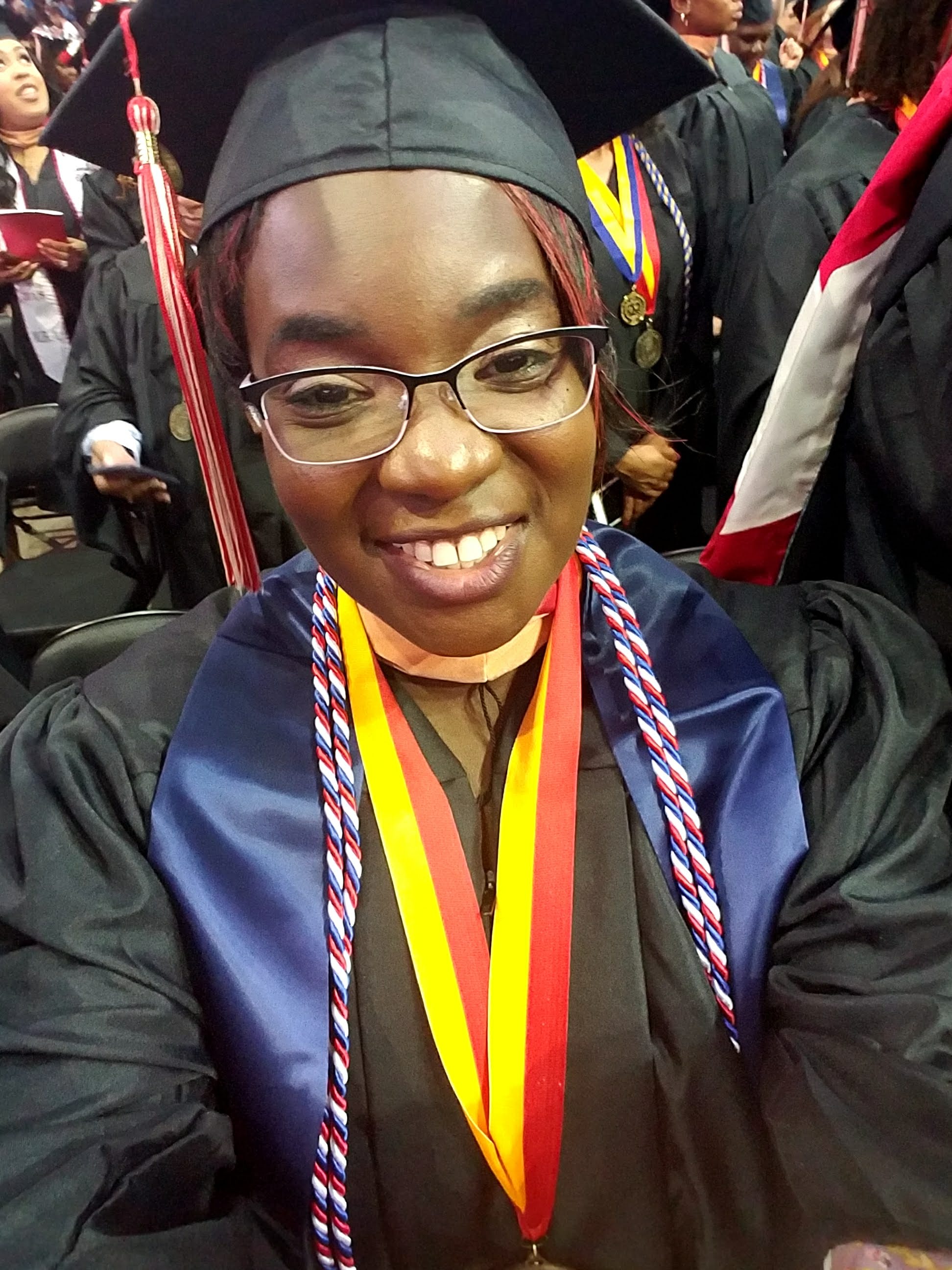
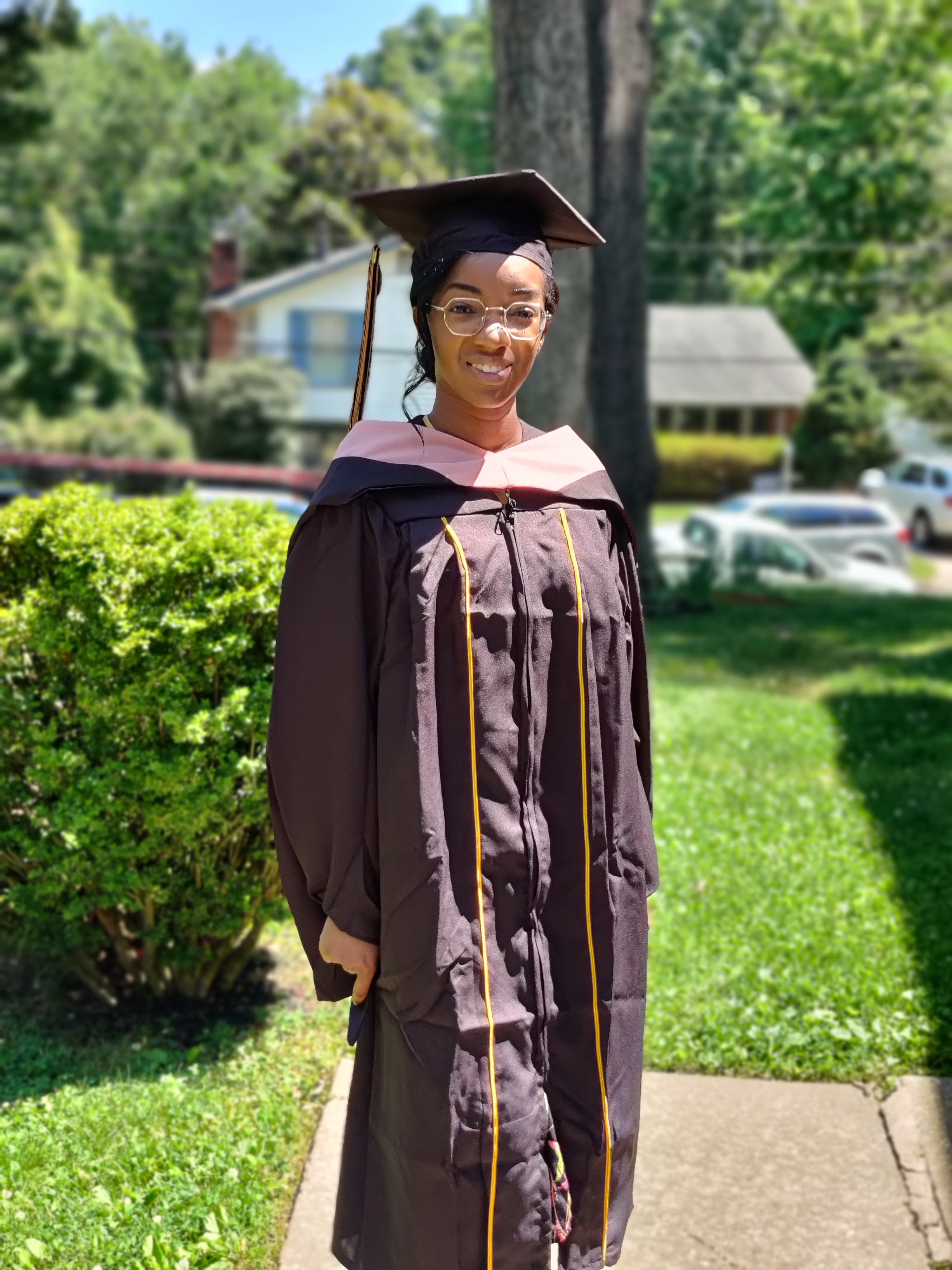
I created the scholarships to help a graduating senior and undergraduate student offset some of their financial burden. I remember attending community college after graduating high school and adding up all the small scholarships that help assist me paying for my higher education.
We are all in this together!
Higher Education is important. If you are not learning something new, you are not growing. The scholarship is for individuals who will be attending at minimum half-time student at an accredited college, university or attend a vocational or technical school in pursuit of a career.
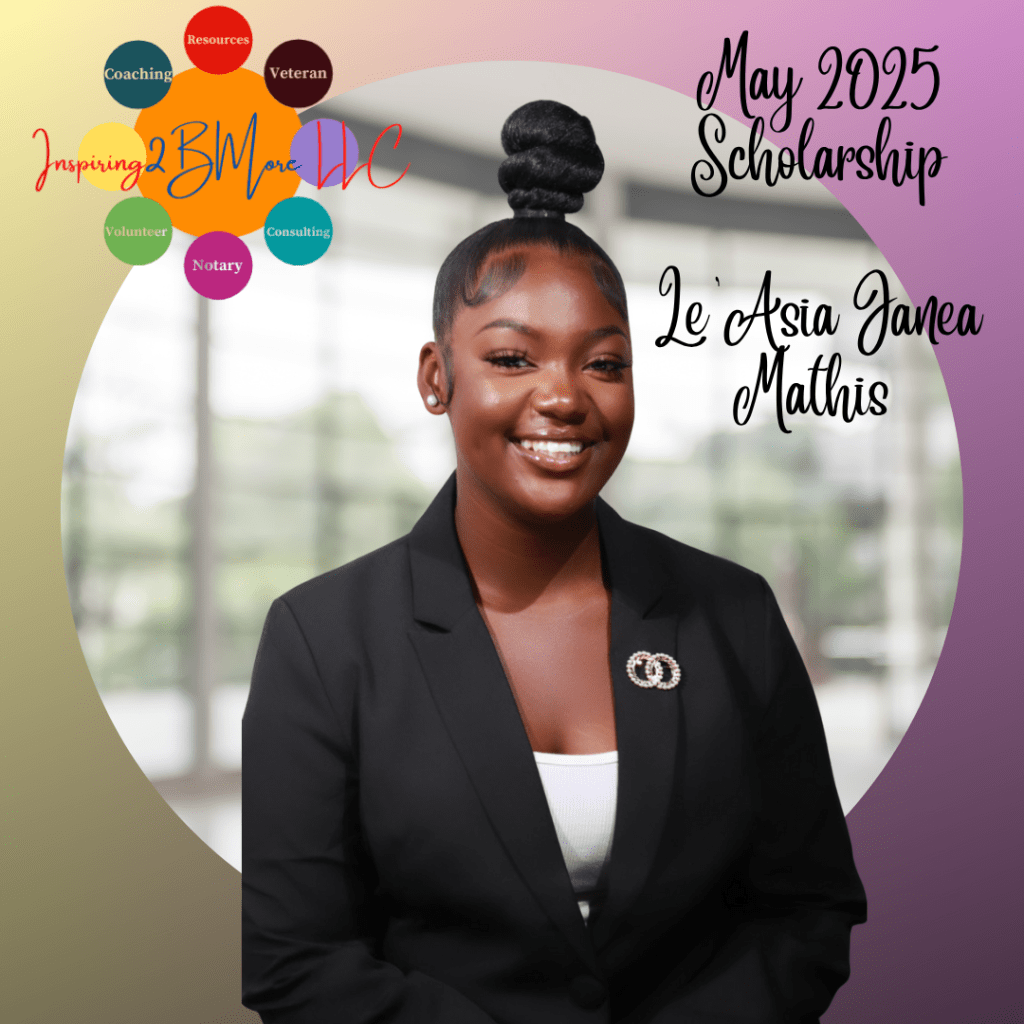
The Inspiring2BMore scholarship is based upon academic achievement and leadership as expressed through co-curricular activities and community involvement. A minimum $250 scholarship will be given annually. The recipient(s) will be notified by email. The check will be forwarded to the acceptance institution.
The Eligibility Criteria for Graduating High School Senior:
Must be a graduating senior, showing academic promise, with a cumulative minimum GPA of 3.0 on a 4.0 grading scale. Include 2 Letters of recommendations, at minimum 1 from a current Teacher, other Administrative Faculty Staff, or Principle from the attending school along with a copy of the high school Transcripts.
Submit a biographical sketch stating the applicant’s goals and how the scholarship will be utilized.
Applicants must plan to enroll at minimum as a half-time student at an accredited college, university or attend a vocational or technical School in pursuit of a career producing field of study.
Application material must be submitted via google form or email date stamped no later than midnight of the submission deadline date of 30 April.
The Scholarship Committee will use the following criteria for selection:
Academic achievement.
Leadership ability as expressed through co-curricular activities and community involvement.
The Eligibility Criteria for Undergraduate Students:
The Inspiring2BMore Scholarship have been established to support undergraduate students.
This scholarship is based upon academic achievement and leadership as expressed through community involvement. A minimum $250 scholarship will be awarded. The recipient(s) will be notified by email. The check will be forwarded to the acceptance institution.
Must be an undergraduate showing academic promise with a cumulative minimum GPA of 3.0 on a 4.0 grading scale. Include 2 Letters of recommendation and a copy of most recent school transcripts.
Submit a biographical sketch stating the applicant’s goals and how the scholarship will be utilized.
Applicant must plan to enroll at minimum as a half-time student at an accredited college, university or attend a vocational or technical School in pursuit of a career.
The Scholarship Committee will use the following criteria for selection.
Academic achievement.
Biographical Sketch
Recommendations.
Transcripts
Application material must be submitted via google form or email date stamped no later than midnight of one of the 2 deadline dates: 30 Dec or 30 May.
The Inspiring2BMore Scholarship have been a vision of mine to create for many years. I want to be able to assist graduating seniors and undergraduates through my platform. 2024 is the inaugural year to take the leap and just do. The number of scholarships awarded will be based upon the funding available.






 Inspiring2BMore